 Membership
 Donate
 Get Involved

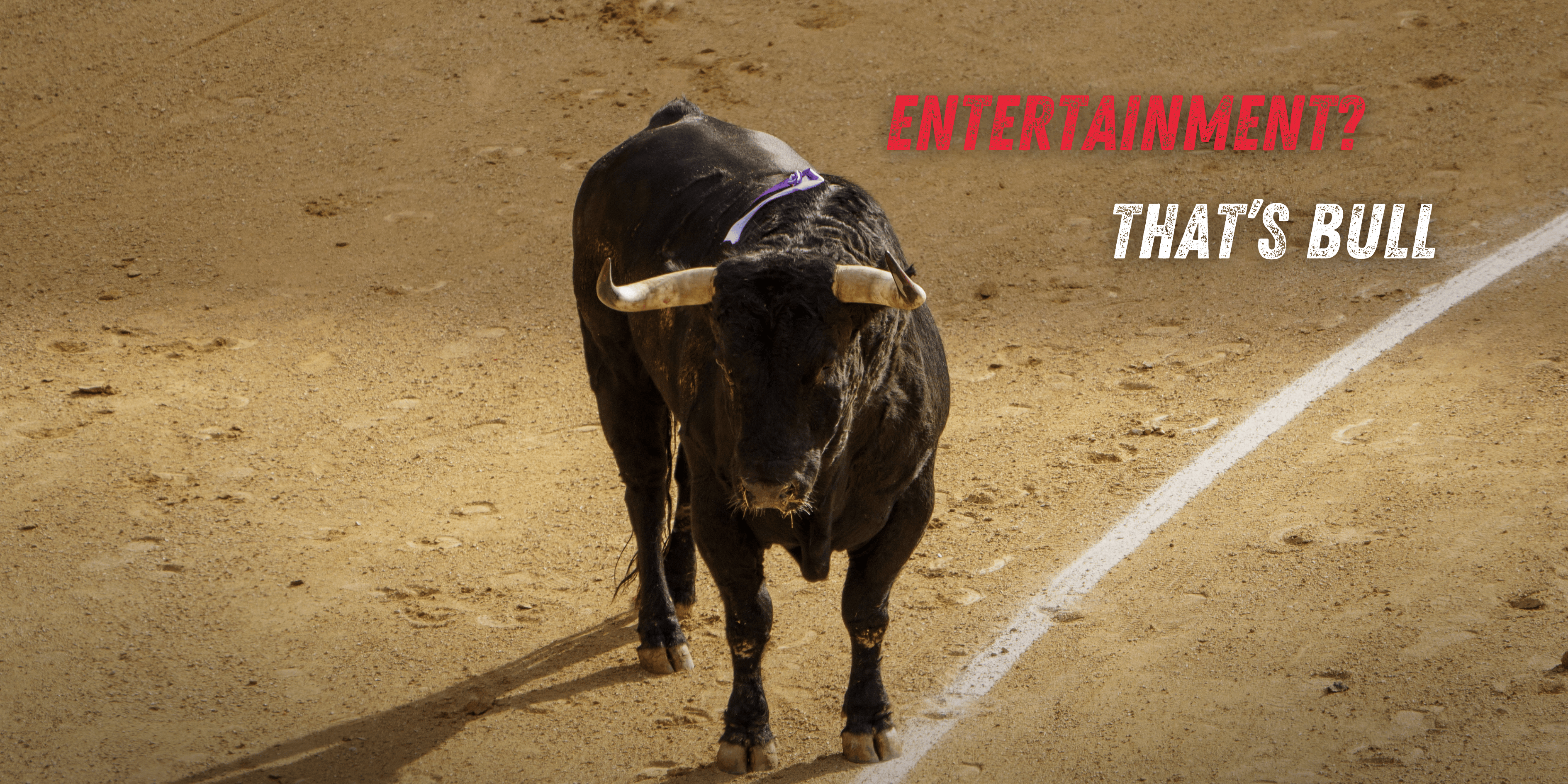

Rodeos: Cruelty is Not Entertainment
Rodeos are competitive events in which calves, steers, bullocks, and horses are chased, ridden, tied, and stressed in arenas before paying audiences. Competitions may be timed and scored by judges. The underlying aim is to thrill the crowd, but this comes at the expense of animals’ welfare. These animals cannot consent to participate and are routinely subjected to fear, pain, and psychological stress.
Most rodeo events rely on hurting or stressing normally docile animals such as horses and bulls to make them buck. They react to flank straps around their bodies and human riders on their backs as they would react to a predator. When the riders stop and the straps are loosened, the bucking stops, but some animals take much longer to calm down. After events, animals are often sent to sale yards for slaughter or breeding purposes.
Calf Roping
One of the most brutal rodeo events is “rope-and-tie,” where calves, sometimes less than a month old, are chased by riders on horses and lassoed around the neck. The abrupt stop can throw the calf into the air, and the human then throws the calf to the ground and ties its legs together.
A Queensland study found that calves previously used in rodeos experience significantly higher stress responses during these events. Stress hormones, including cortisol, epinephrine, and norepinephrine, rise sharply, and all calves display eye-rolling, indicating extreme distress. Events like this are barbaric, inherently cruel, and unacceptable.
Regulation Exists - But It’s Not Enough
Queensland does have a Code of Practice about Rodeos under the Animal Care and Protection Act 2001. The Code sets minimum welfare standards, such as requiring organisers to prevent animals from being unduly disturbed by loud noises and fireworks.
But in practice, the Code is inadequate and poorly enforced. Events like Bikes and Bulls have been operating for multiple years, routinely using pyrotechnics, motorbikes, and loud amplified music while bulls are in the arena, all of which directly contravene the Code. This demonstrates that even where legislation exists, animals continue to suffer and enforcement fails.
We believe rodeos can never be fully safe or humane, and the current regulatory framework is not sufficient to protect animals from harm.
Animal Justice Party Policy on Rodeos
The Animal Justice Party opposes rodeos and the use of animals for sport or entertainment. We advocate for:
- An immediate ban on rope-and-tie events
- A rapid phase-out of all rodeos
- Increased funding for cruelty-free community sporting events in rural Queensland
- Promotion of non-violent alternatives free from animal exploitation
Rodeos are not just a rural tradition, they are an outdated, cruel practice that teaches children that hurting animals is acceptable. A 2022 survey by McCrindle showed that 67 per cent of Australians were concerned or very concerned about the welfare of animals at rodeos.
Bikes and Bulls: A Current Example
The upcoming Bikes and Bulls event at the Brisbane Entertainment Centre on 31 January 2026 is a stark example of rodeo cruelty in action. Public footage shows bulls exposed to:
- Flame effects and pyrotechnics while actively bucking or being ridden
- Loud amplified music, commentary, and abrupt sound cues
- Motorbikes performing stunts over the arena while bulls are in the chutes
These conditions clearly breach the Animal Care and Protection (Code of Practice about Rodeos) Amendment Regulation 2021, which requires organisers to prevent animals from being unduly disturbed by noise and fireworks.
The issue has been raised with RSPCA Queensland, who referred it to the Department of Primary Industries (Animal Welfare Branch). Immediate intervention is required to ensure compliance with the law and prevent further harm.
Update 28/2
Thanks to the strong response from members and supporters, more than 160 letters were sent to the Department of Primary Industries (DPI). As a result, DPI confirmed that an inspector attended the event.
Following the event, the attending inspector verbally advised that no breach was identified. The reasoning provided was that the fireworks were positioned along the outer edge of the arena fence, and therefore not technically “in the arena”, and that although motorbike chutes were above the bulls, they did not appear to show visible signs of stress at the time.
This raises important questions about how Queensland’s Rodeo Code of Practice is interpreted and enforced. The Code does not clearly outline how stress is to be assessed, nor does it specify that compliance relies on subjective determinations about visible behavioural responses.
Animal welfare regulation should be preventative, designed to remove unnecessary stressors before harm occurs, rather than reactive.
We are continuing to seek clarification from DPI regarding how “undue stress” is defined and assessed, and whether the current Code provides sufficient protection for animals used in rodeos.
Thank you to everyone who took action. Your advocacy ensured this issue received formal scrutiny, and we will continue working toward stronger, clearer protections for animals in Queensland.
Campaigns & actions in other states
Across Australia, community campaigns have mobilised against rodeos:
-
In NSW, AJP and Emma Hurst, our State MP, have publicly called for a ban on rodeos, noting that practices like calf roping remain legal despite their cruelty, and that jurisdictions such as South Australia, Victoria, and the ACT have already prohibited or restricted severe rodeo events.
-
RSPCA branches in states such as Western Australia, alongside the AJP, have condemned rodeos as “outdated and inhumane,” urging community members to rethink attending these events, and highlighting that calves and cattle experience fear, stress and the risk of injury in every rodeo activity.
Animal welfare laws vary across states and territories.
-
The ACT has banned all rodeo events under animal welfare legislation.
-
Victoria and South Australia have effectively outlawed high‑risk calf roping by requiring cattle to exceed 200 kg, keeping young calves out of the event.
-
Other states, including Queensland, NSW, Tasmania, NT and WA, still allow calf roping and other rodeo practices to continue under varying codes or regulations.
This patchwork of regulation highlights that while some jurisdictions have recognised the welfare issues and acted accordingly, others have failed to protect animals from fear, distress and injury inherent in rodeo events.
Sources
- Animal Justice Party NSW - Ban Rodeos
- Animal Justice Party National - Rodeos
- Animal Justice Party National - Animals in Entertainment
- Animal Care and Protection (Code of Practice about Rodeos) Amendment Regulation 2021 – Queensland Legislation
- Australian Veterinary Association – Rodeos and animal welfare
- RSPCA – Rodeo cruelty
- Lifeline – Regional suicide statistics
- PETA – Rodeos are cruel


